No Cloud Required
Notes from running harness-based AI on my own machine — what works, what breaks, and why it changes how I think about tooling.
Most of what passes for "AI for professionals" assumes the work lives somewhere else: someone else’s servers, someone else’s account, someone else’s retention policy. I wanted the opposite — agents that run on the machine under my desk, against my own files, with no round trip to a cloud service for things that do not need one.
This is a note on what that actually looks like in practice: two harnesses, OpenClaw and Hermes, a local model server, and a set of habits that keep it useful rather than impressive.
What the setup actually is
A harness is the layer between me and a model. It holds the tools, the memory, the scheduled jobs and the guardrails. The model is swappable; the harness is the part that accumulates value.
[Editor note: describe your actual topology here — which machine runs what, which model serves local inference, which tasks route to a paid model and why. Specifics beat adjectives.]
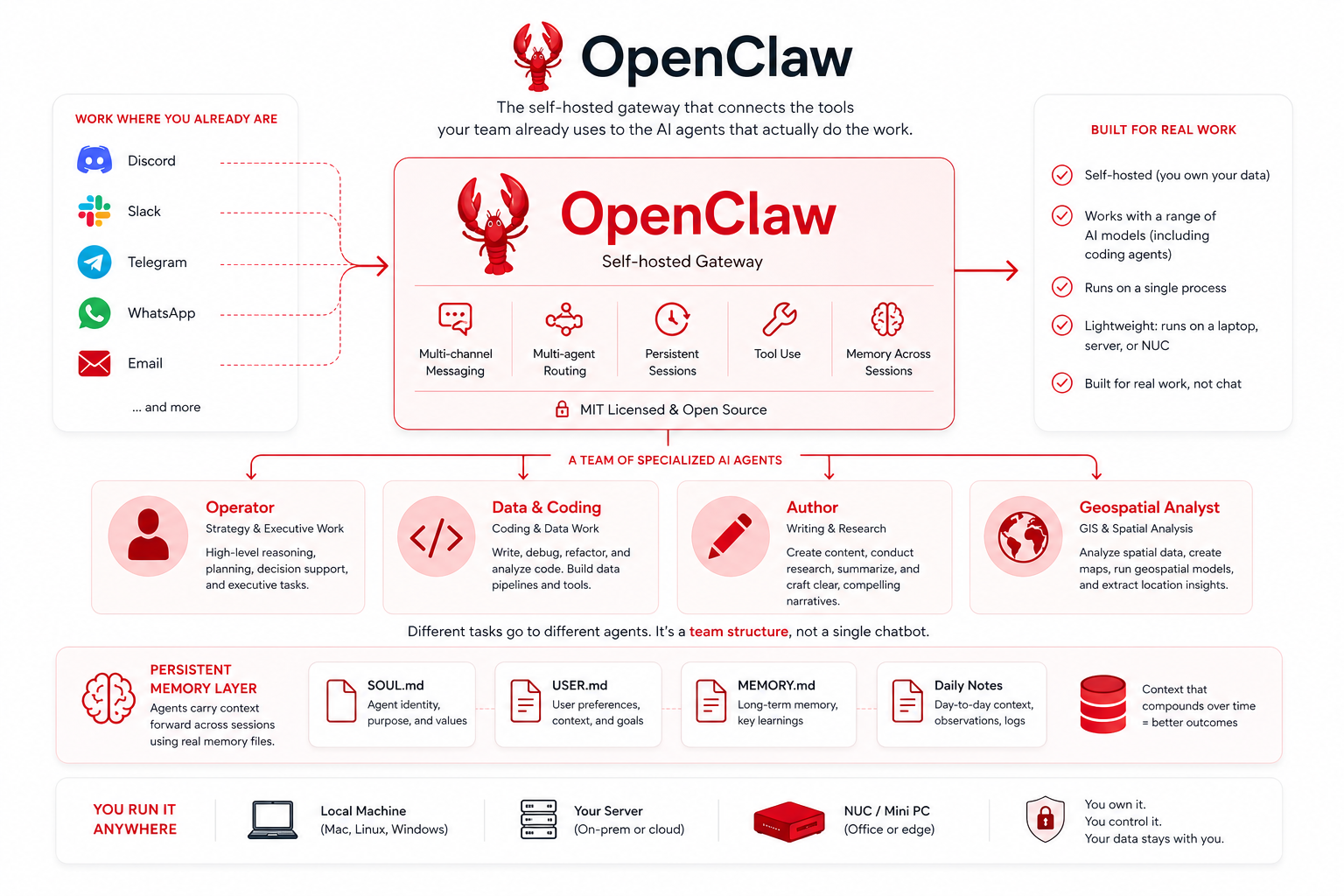
Diagram of Current Set Up
What it does well
Local-first is not a purity exercise. It is a latency and privacy argument that happens to have a capability payoff: when the marginal cost of asking a question is zero, you ask more questions, and the agent becomes part of how you work rather than a thing you visit.
The tasks that changed for me: file triage and rename, drafting scaffolding for deliverables, reading a stack of PDFs for the three sentences that matter, keeping a running record of what I decided and why.
Where it breaks
Honest list. Long context still fails in ways that look like success. Local models are confidently wrong in the same register as good models, which is worse than being obviously wrong. Anything that needs a credential or a judgment call should stop and ask, and most harnesses will happily not stop.
[Editor note: add the specific failure you hit that made you re-architect something — the most useful part of this piece is the anecdote.]
What this means for the future of practice
If the harness is where the value accumulates, then the interesting question for planning, engineering and consulting firms is not "which model do we license" but "whose machine does the work run on, and who owns what it learns". That is a governance question dressed as a technology question, and it is arriving before most firms have an answer.